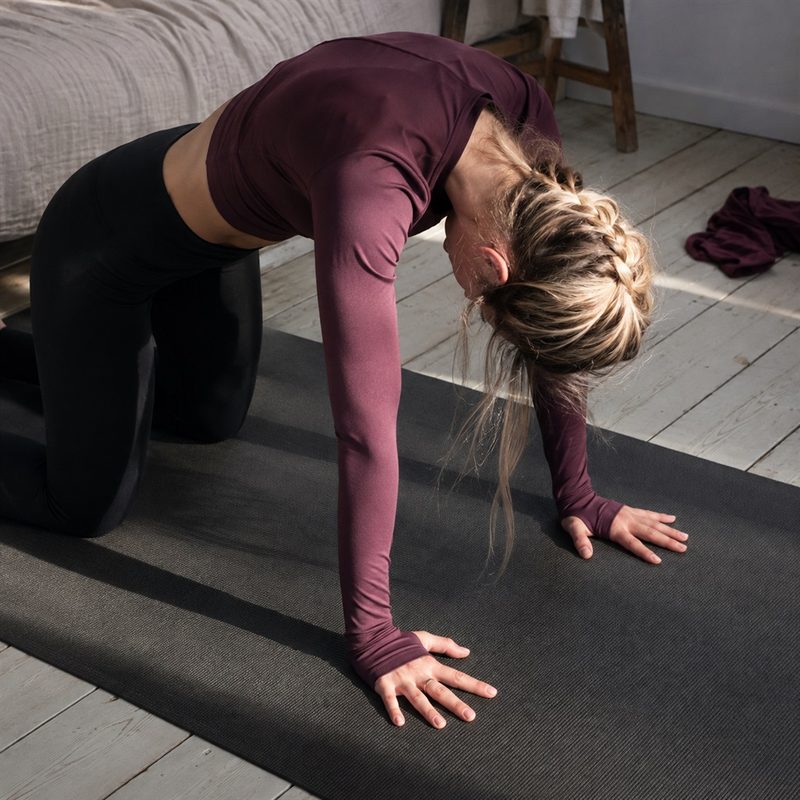
A woman on all fours rounding her spine on a mat in broken window light

Why Pilates

Slow is the point.

What Pilates-style movement is, why it suits a full life, and what Nouvelou leaves out on purpose.

The practice

What Pilates-style movement is

Pilates works the muscles that hold you up: the deep abdominals, the pelvic floor, the small muscles along the spine, the glutes. It does that with slow, controlled movement and a steady breath, on a mat, one segment of the spine at a time.

The tempo is the method. A roll-up done in eight slow counts asks more of your core than twenty fast crunches, and it asks it politely. You feel exactly which part is working, and you never get to cheat with momentum.

Nouvelou's version is mat-based. No reformer, no studio, no springs. A mat, a bit of floor, and for some sessions a chair or a wall.
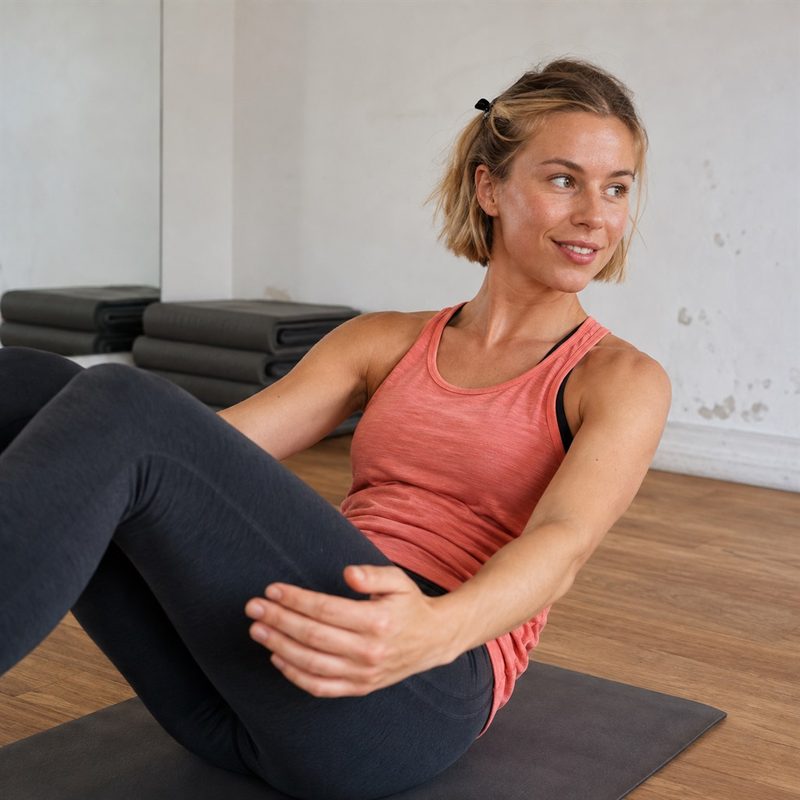
A woman in a controlled Pilates crunch, looking calm
Control over speed. The crunch is slow enough to feel.
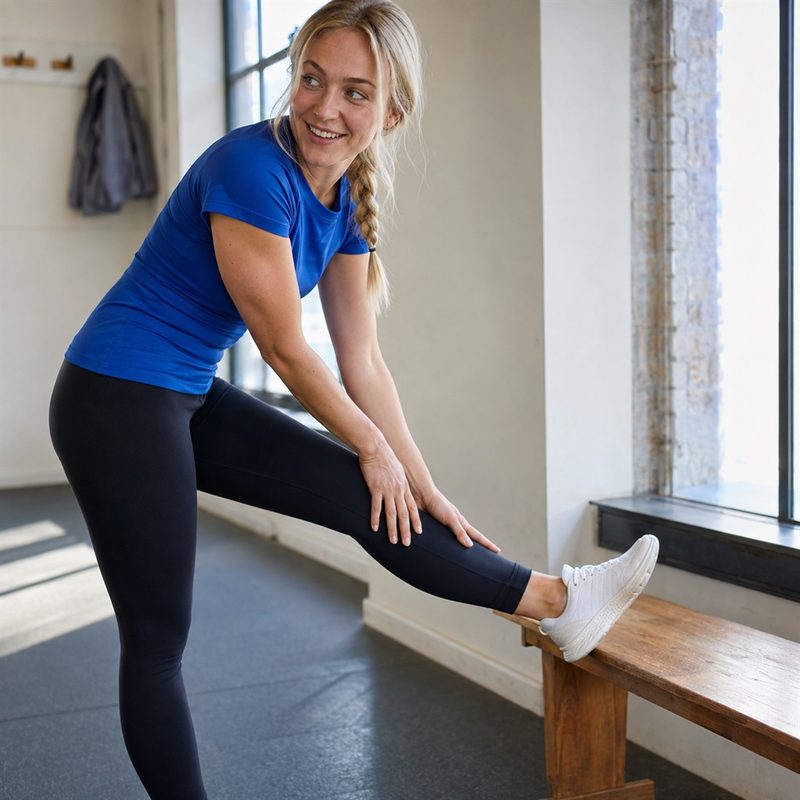
A woman stretching her hamstring with one foot on a bench

Why it suits a normal life

Quiet, short, and kind to a tired body.

There is no jumping and no impact, so you can practise in socks in the living room at six in the morning without waking anyone. Nothing to buy, nothing to set up.

Sessions run 10 to 20 minutes. That is short enough to happen before work, or after the kids are down, on a day when an hour was never going to happen.

It scales. Foundation sessions are slow and supported. Build adds range and load. Flow links it into longer sequences. The same movement family carries you from your first week to your fiftieth session.

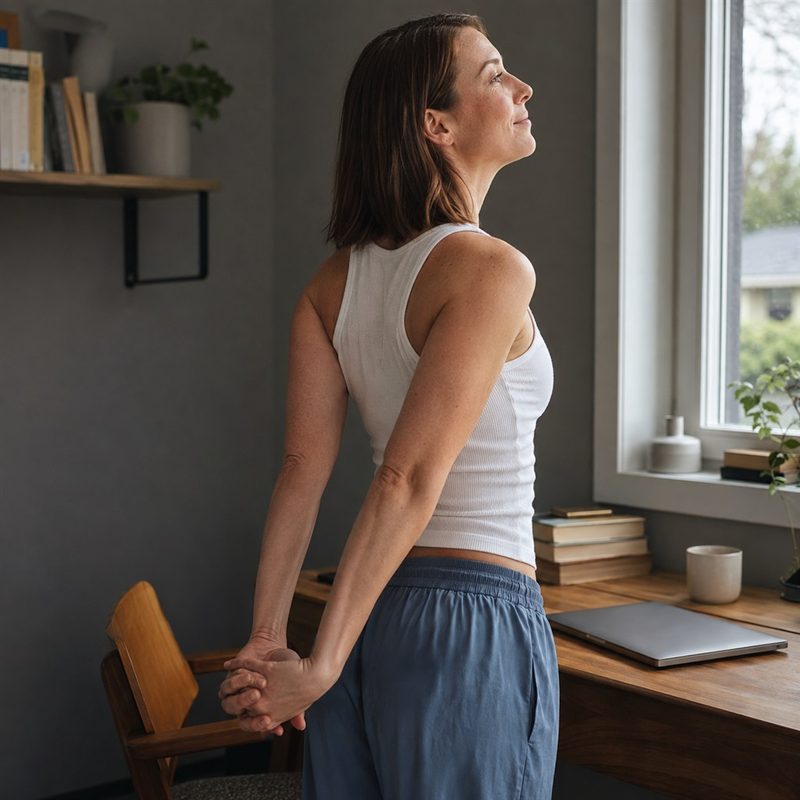
A woman standing at her desk with her hands clasped behind her back

Posture

The desk day, undone.

Eight hours in a chair pull the body into one shape: hips tight, upper back rounded, chin forward, shoulders up by the ears. Most of us stand up at five o'clock still wearing it.

Posture sessions take that shape apart. Open the chest. Extend the upper back. Wake up the glutes that spent the day switched off. Let the neck lengthen instead of bracing.

The Fix Posture program ends with a session called Aligned Through the Day. It teaches small resets you can do at the desk, so the work does not stay on the mat.

Back and neck

Gentle, supported, and breathing first

A stiff back wants movement, and it wants it slowly. Back Relief Basics starts with Back Reset and Neck & Shoulder Release: small ranges, long breaths, plenty of support from the floor. Nothing is forced and nothing is held past comfort.

One rule sits above every session in this program. If something hurts, stop. If you have a diagnosed condition, an injury, or you are pregnant, talk to your doctor before you begin. Nouvelou is a fitness product and does not give medical advice.

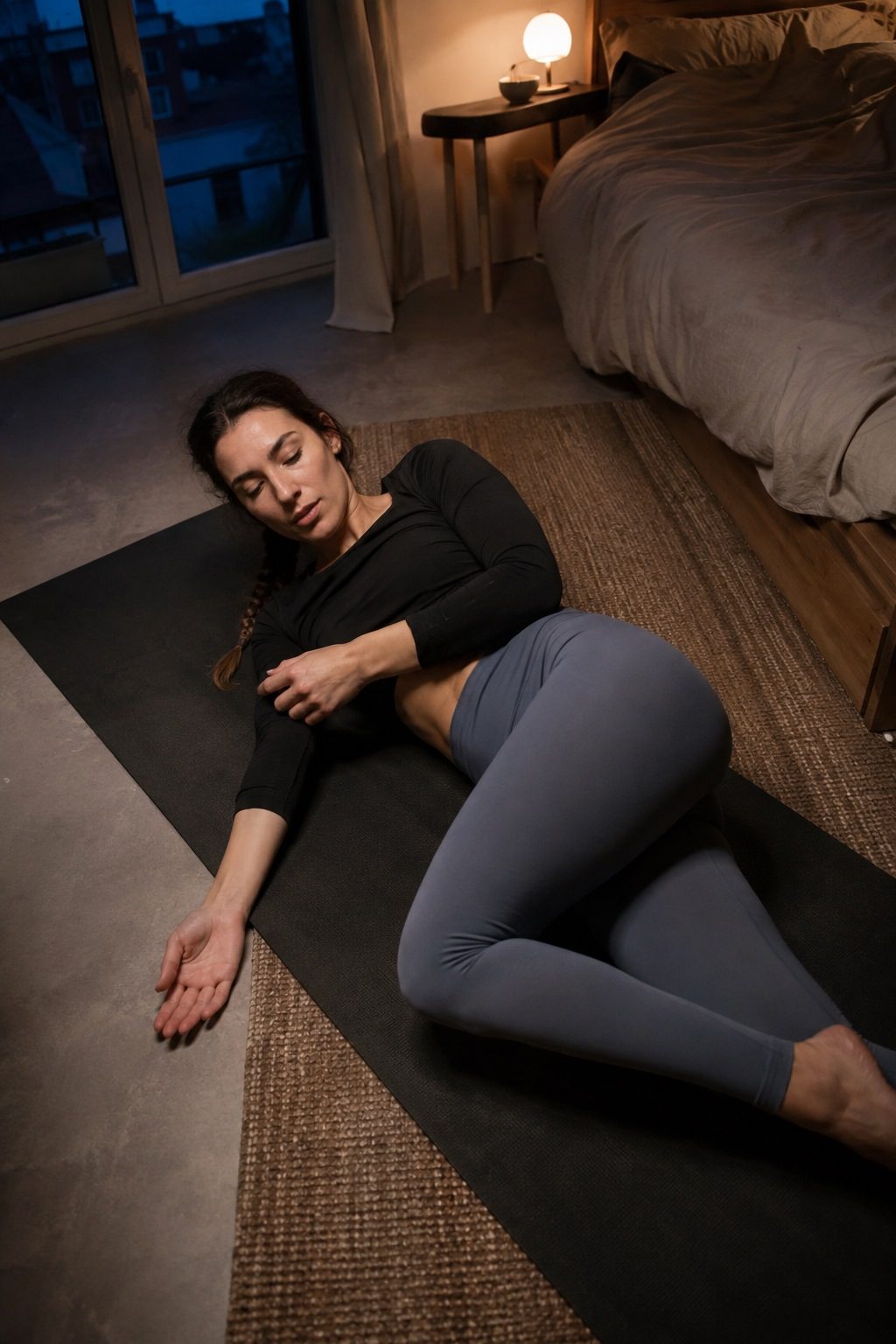
A woman lying on her side on a mat in a dim bedroom

Consistency

Twelve minutes on most days beats an hour on Sunday.

Muscles learn from repetition, and posture learns from reminders. A short session on most days gives the body a new default. One long session a week gives it a sore Monday.

That is why the app is built around the habit rather than the workout. Short sessions. A streak that forgives a missed day. A course about showing up. A comeback session for after a break.

On purpose

What you will not find here

  • No jumping, no burpees, no impact.
  • No equipment to buy. A mat is enough, and a chair or a wall now and then.
  • No calorie targets and no weigh-ins. The recipes are food, not a diet.
  • No before-and-after promises. We tell you what a session does, and you decide what it does for you.
  • No leaderboard. The only person you are keeping up with is you last week.
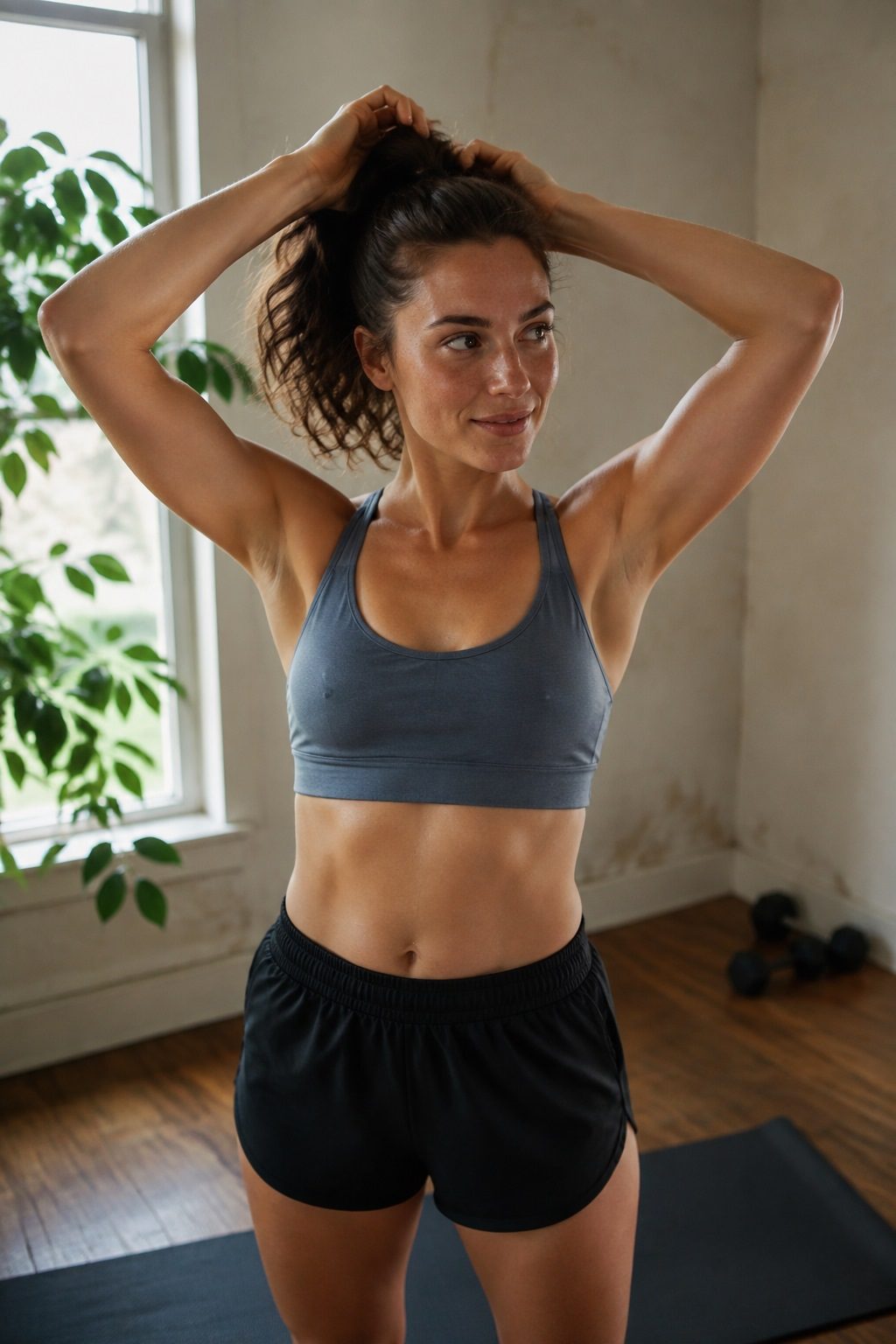
A woman tying her hair back before a session in a sunlit room

Start today

Your plan is a short quiz away.

A few minutes of questions. No account until you pick a plan.

Take the quiz